Epigenetics: Understanding Gene Regulation, DNA Methylation, and Chromatin Biology
Explore epigenetics research, DNA methylation, histone modifications, chromatin remodeling, epigenomics, and advanced technologies for gene expression analysis.
Introduction: What Is Epigenetics?
Epigenetics is a major field of molecular biology that investigates how gene activity can change without altering the underlying DNA sequence. These changes are influenced by molecular mechanisms that regulate how genetic information is organized, accessed, and used within cells. Epigenetic mechanisms help explain how cells with essentially the same genome develop different structures and functions. They also contribute to cellular differentiation, responses to environmental signals, and the maintenance of cellular identity. As biotechnology advances, epigenetics research is becoming increasingly important for understanding gene regulation, chromatin organization, and the complex relationships between genetic information and cellular activity. Modern epigenomics technologies allow researchers to investigate DNA methylation, histone modifications, chromatin accessibility, and other molecular features across individual genomic regions or entire genomes.

1. How Does Epigenetics Work?
Epigenetic regulation involves molecular processes that influence the accessibility and activity of genes. These mechanisms affect how DNA interacts with regulatory proteins and the cellular machinery responsible for transcription.
Unlike genetic mutations, epigenetic changes do not necessarily modify the DNA sequence itself. Some epigenetic marks can be maintained as cells divide, while others are dynamic and respond to developmental signals or environmental conditions.
Three major mechanisms are particularly important in epigenetics research:
- DNA methylation: The addition of methyl groups to DNA, often at cytosine bases, which can influence gene regulation.
- Histone modifications: Chemical changes to histone proteins that affect chromatin structure and gene accessibility.
- Chromatin remodeling: Changes in the organization of DNA and associated proteins that influence access to genomic regions.
Non-coding RNAs and other regulatory molecules can also contribute to epigenetic processes.
Together, these mechanisms form a complex regulatory system that helps control gene expression and maintain appropriate cellular functions.

2. DNA Methylation: A Key Epigenetic Mechanism
DNA methylation is one of the most extensively studied mechanisms in epigenetics. It commonly involves the addition of a methyl group to cytosine bases in specific DNA contexts, particularly at CpG sites in mammalian genomes.
DNA methylation patterns can influence transcription, genomic stability, cellular differentiation, and the regulation of repetitive DNA sequences.
In many gene promoters, increased DNA methylation is associated with reduced transcription. However, the relationship depends on genomic location, cellular context, and other regulatory factors.
Researchers investigate DNA methylation to understand:
- Gene regulation and transcriptional activity.
- Cellular differentiation and developmental processes.
- Epigenetic variation between cell populations.
- Changes in methylation patterns across experimental conditions.
- Relationships between DNA methylation and other molecular features.

Technologies for DNA Methylation Analysis
Several methods enable researchers to investigate DNA methylation patterns.
Bisulfite sequencing helps identify methylated cytosines at high resolution by distinguishing methylated and unmethylated cytosines under appropriate experimental conditions.
Methylation arrays provide a standardized approach for measuring methylation at selected genomic sites.
Long-read sequencing technologies can support methylation analysis through the detection of certain modified DNA bases, depending on the platform and analytical method.
These technologies provide complementary approaches for investigating epigenetic variation and genome-wide methylation patterns.
3. Histone Modifications and Chromatin Structure
DNA is packaged around histone proteins to form chromatin. This organization allows genetic material to fit inside the nucleus while also providing a regulatory structure that influences gene activity.
Histone proteins can undergo several chemical modifications, including acetylation, methylation, phosphorylation, and ubiquitination.
These modifications can affect interactions between histones, DNA, and regulatory proteins.
For example, histone acetylation is often associated with more accessible chromatin and active transcription, although the effects depend on the specific histone residue and biological context. Histone methylation can be associated with either active or repressed gene regions, depending on the modification involved.
Understanding histone modifications helps researchers investigate:
- Chromatin organization and accessibility.
- Transcriptional regulation.
- Cellular differentiation.
- Interactions between regulatory proteins and DNA.
- Epigenetic patterns across different cell populations.
Chromatin Immunoprecipitation Sequencing (ChIP-seq)
ChIP-seq combines chromatin immunoprecipitation with next-generation sequencing to investigate the genomic distribution of selected histone modifications or DNA-associated proteins.
Researchers use ChIP-seq to map regulatory features across the genome and examine relationships between chromatin marks and gene activity.
Other complementary methods, including CUT&RUN and CUT&Tag, can support targeted analysis of chromatin-associated proteins and histone modifications.
4. Epigenomics: Studying Epigenetic Patterns Across the Genome
Epigenomics extends epigenetics research by examining epigenetic features across large genomic regions or entire genomes.
While traditional epigenetics studies may focus on individual genes or selected molecular mechanisms, epigenomics aims to characterize broader patterns of gene regulation and chromatin organization.
Common epigenomics approaches include:
- Whole-genome bisulfite sequencing.
- Reduced-representation bisulfite sequencing.
- DNA methylation arrays.
- ChIP-seq for histone modifications.
- ATAC-seq for chromatin accessibility.
- CUT&Tag and CUT&RUN.
- Single-cell epigenomic profiling.
These technologies generate complex datasets that often require bioinformatics, statistical analysis, and specialized visualization methods.
By integrating epigenomic data with transcriptomics and other molecular measurements, researchers can explore relationships between chromatin features, gene expression, and cellular identity.
5. The Role of Epigenetics in Cell Biology and Development
Epigenetic regulation is essential for many biological processes, particularly cellular differentiation and development.
Although most cells within an organism contain broadly similar genetic information, different cell types express different sets of genes. Epigenetic mechanisms contribute to these differences by regulating the accessibility of genomic regions and helping establish cell-specific expression patterns.
During development, epigenetic changes help coordinate the transition from less specialized cells to cells with distinct biological functions.
Epigenetic regulation also contributes to:
- Stem cell identity and differentiation.
- Tissue-specific gene expression.
- Cellular responses to environmental signals.
- Chromatin organization during development.
- Maintenance of gene expression patterns during cell division.
Studying these mechanisms allows researchers to better understand how molecular regulation contributes to the structure and function of complex biological systems.

6. Environmental Factors and Epigenetic Variation
Epigenetic patterns can be influenced by developmental conditions, cellular environments, nutrition, and other external or internal signals. However, the effects vary depending on the factor, tissue, exposure, and biological context.
Researchers investigate how environmental influences relate to DNA methylation, histone modifications, chromatin accessibility, and gene expression.
It is important to distinguish between an observed association and a demonstrated causal relationship. An epigenetic difference does not automatically establish that a particular exposure caused the change or that the change will be inherited by future generations.
Experimental design, appropriate controls, longitudinal observations, and independent validation are essential for interpreting these findings.
Epigenetic research therefore provides a framework for exploring how genetic information and environmental context interact at the molecular level.
7. Single-Cell Epigenetics and Emerging Technologies
Traditional epigenomic methods often analyze groups of cells together, which can obscure differences between individual cells.
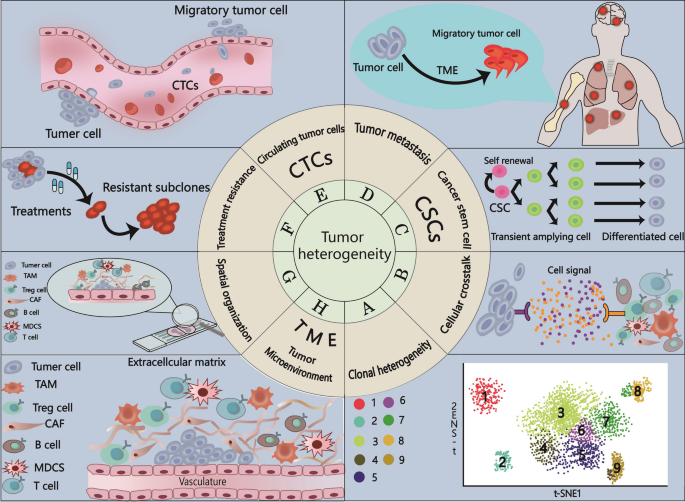
Single-cell epigenomics addresses this limitation by investigating molecular features at individual-cell resolution. It enables researchers to explore cellular heterogeneity, identify distinct cell populations, and examine variation in chromatin regulation.
Emerging approaches include:
Single-cell ATAC-seq: Measures chromatin accessibility in individual cells.
Single-cell DNA methylation profiling: Investigates DNA methylation patterns across individual cells.
Single-cell multi-omics: Combines multiple molecular measurements, potentially including chromatin accessibility, DNA methylation, gene expression, or protein information.
Spatial epigenomics: Emerging methods seek to preserve spatial context while characterizing epigenetic features within tissues.
These technologies are expanding the scope of epigenetics research, while introducing new requirements for data processing, quality control, computational modeling, and interpretation.
8. Bioinformatics and AI in Epigenetics Research
Epigenomic experiments can generate millions of measurements across genomic regions, cell populations, and experimental conditions. Computational analysis is essential for transforming these measurements into interpretable results.
Bioinformatics workflows commonly include sequencing quality control, read alignment, peak calling, methylation quantification, differential analysis, and functional annotation.
Machine learning can also help researchers identify complex patterns within epigenomic datasets.
Applications include:
- Classification of epigenetic profiles.
- Identification of regulatory genomic regions.
- Integration of DNA methylation and RNA-seq datasets.
- Analysis of single-cell epigenomic heterogeneity.
- Exploration of chromatin states.
- Visualization of epigenetic patterns across biological samples.
AI-based models can support pattern recognition, but their performance depends on the quality, diversity, and size of the training datasets. Appropriate statistical validation and biological interpretation remain essential.
9. Essential Research Tools and Technologies for Epigenetics
Epigenetics research combines molecular biology techniques with specialized analytical platforms and computational tools.
Important resources include:
- DNA methylation analysis kits: For investigating DNA methylation patterns.
- Chromatin immunoprecipitation reagents: For studying interactions between DNA and chromatin-associated proteins.
- Antibodies for histone modifications: For detecting specific modified histone proteins in appropriate research applications.
- Sequencing technologies: For genome-wide methylation profiling, chromatin mapping, and related analyses.
- Chromatin accessibility assays: For investigating accessible genomic regions.
- Bioinformatics software: For processing and interpreting epigenomic datasets.
- Epigenomic databases: For exploring published datasets and genomic annotations.
Selecting suitable research products and technologies depends on the biological question, sample type, required resolution, experimental design, and downstream analysis strategy.
10. The Future of Epigenetics Research
Epigenetics is moving toward increasingly integrated and high-resolution approaches. Advances in sequencing, single-cell technologies, spatial analysis, and computational biology are making it possible to investigate regulatory mechanisms with greater detail.
Several important directions are shaping the field:
- Integration of epigenomics with transcriptomics and proteomics.
- Improved characterization of cell-specific epigenetic patterns.
- More detailed mapping of chromatin structure and regulatory regions.
- AI-assisted analysis of complex epigenomic datasets.
- Expanded use of long-read sequencing for selected epigenetic applications.
- Development of more reproducible computational workflows.
As these technologies mature, epigenetics will continue to support fundamental research into gene regulation, cellular identity, and the molecular organization of biological systems.

Conclusion
Epigenetics provides essential insights into how cells regulate gene activity without necessarily changing their DNA sequence. Through DNA methylation, histone modifications, chromatin remodeling, and related mechanisms, researchers can investigate how gene expression is controlled across different biological contexts.
Modern epigenomics technologies, including bisulfite sequencing, ChIP-seq, ATAC-seq, and single-cell profiling, allow scientists to characterize epigenetic patterns at increasingly detailed resolutions.
When combined with bioinformatics, AI, and multi-omics integration, these approaches offer powerful opportunities to investigate gene regulation and cellular complexity.
For researchers exploring molecular biology, genomics, and biotechnology, epigenetics remains an important area of scientific investigation.
Explore Gentaur Research Services: https://gentaur.com/services
Frequently Asked Questions About Epigenetics
What is epigenetics in simple terms?
Epigenetics studies changes in gene activity that occur without changing the underlying DNA sequence. These changes can influence how genetic information is used by cells.
What are the three main mechanisms of epigenetics?
Three major mechanisms are DNA methylation, histone modifications, and chromatin remodeling. Regulatory non-coding RNAs and other processes also contribute to epigenetic regulation.
What is the difference between genetics and epigenetics?
Genetics focuses on DNA sequence variation and inheritance. Epigenetics examines regulatory processes that influence gene activity without necessarily altering the DNA sequence.
What is epigenomics?
Epigenomics investigates epigenetic features across large genomic regions or entire genomes, using methods such as DNA methylation sequencing, ChIP-seq, and ATAC-seq.
Which techniques are used in epigenetics research?
Common methods include bisulfite sequencing, DNA methylation arrays, ChIP-seq, ATAC-seq, CUT&Tag, CUT&RUN, and single-cell epigenomic profiling.
How is bioinformatics used in epigenetics?
Bioinformatics supports sequencing quality control, methylation analysis, chromatin accessibility mapping, statistical comparisons, genomic annotation, and integration with gene expression data.